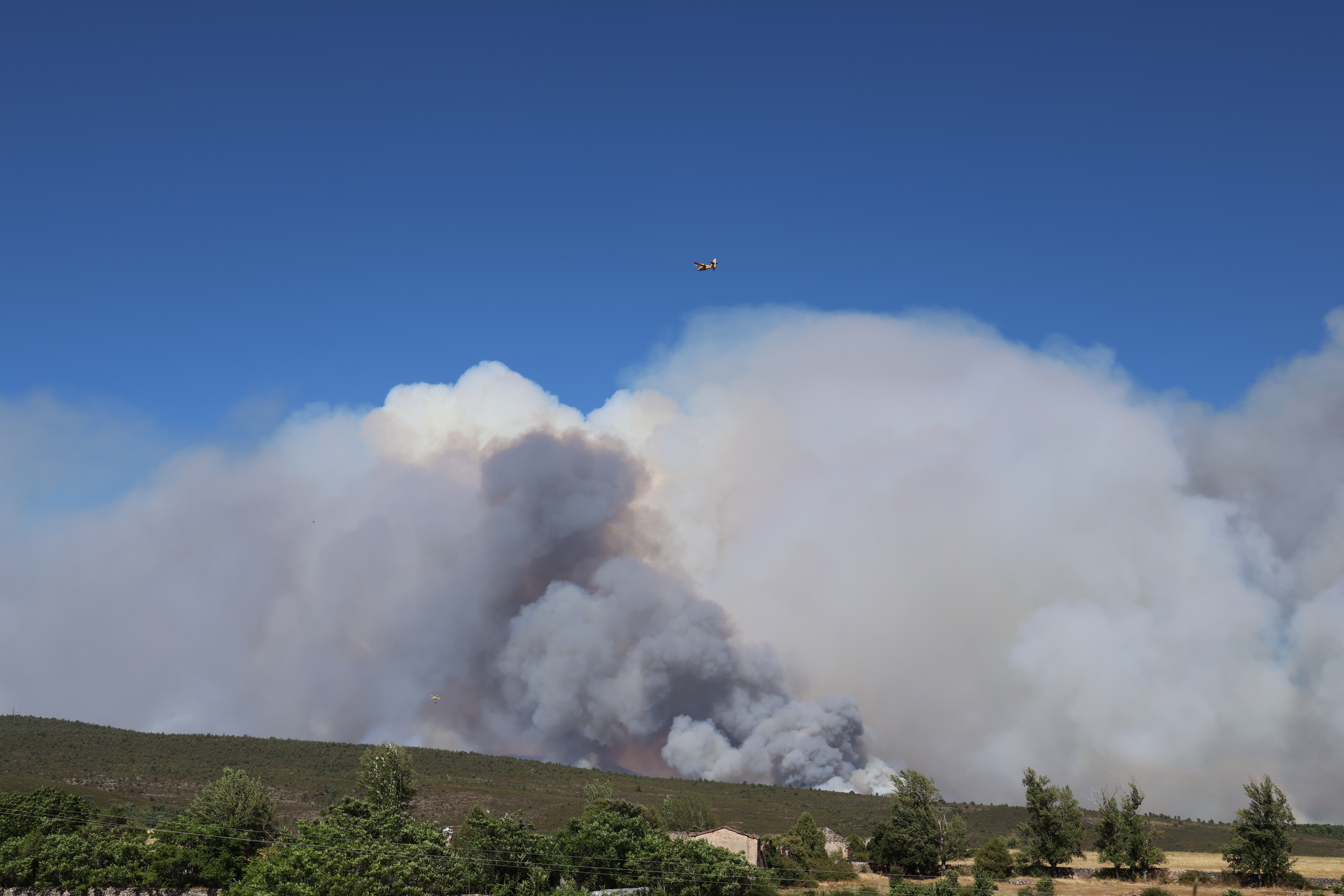
Every summer, wildfires once again put emergency response capabilities to the test. Images of firefighting aircraft dropping water, wildfire crews battling flames, and heavy machinery creating firebreaks reveal only part of the enormous operation taking place on the ground. Behind every one of these actions lies a far less visible, yet absolutely essential component: logistics.
Without effective logistics planning, no firefighting operation could sustain its activity for days or even weeks. Coordinating hundreds of professionals, vehicles, and resources in a constantly changing environment represents one of the greatest operational challenges any organization can face.
A Supply Chain That Cannot Stop
A major wildfire mobilizes an enormous amount of human and material resources. Fire engines, water tenders, heavy machinery, fuel, water supplies, tools, personal protective equipment (PPE), food, communication systems, and medical supplies must all reach the right place at exactly the right time.
Unlike a conventional logistics operation, emergency conditions are constantly evolving. The progression of a wildfire may require routes to be changed, teams to be relocated, or new supply points to be established within minutes. The ability to adapt quickly is therefore one of the most important factors for success.
Coordination Makes the Difference
Large-scale emergencies involve public authorities, fire departments, wildfire suppression crews, civil protection agencies, law enforcement, military units, emergency medical services, and specialized contractors.
All these organizations must share up-to-date information to coordinate movements, allocate resources, and prioritize operations. Well-organized logistics ensure that every team has the equipment and supplies it needs when they are needed, preventing delays and duplication that could compromise the effectiveness of the response.
The Challenge of Operating in a Constantly Changing Environment
Wildfires present an additional challenge: the situation never remains the same. A shift in the wind can change the direction of the fire front, a road may suddenly become inaccessible, or new hotspots may emerge several kilometers away from the main fire. These changing conditions require logistics plans to be continuously reviewed and adjusted.
Operational flexibility, the ability to reorganize routes, and constant communication among all participating organizations are essential to maintaining the effectiveness of the response.
Technology Supporting Emergency Logistics
The management of large-scale emergencies increasingly relies on advanced technologies that improve decision-making.
Geolocation systems allow incident commanders to monitor the real-time position of resources, while digital communication platforms facilitate coordination among the various teams deployed in the field. These technologies are complemented by aerial imagery, digital mapping, and data analysis systems that enable more accurate planning and resource allocation.
Together, these tools help optimize resources and reduce response times.
Lessons for the Logistics Industry
Although the day-to-day operations of a transport company differ greatly from managing a large wildfire, both environments share the same fundamental principles.
Anticipation, planning, team coordination, the ability to respond quickly to unexpected events, and continuous adaptation are essential components of both emergency logistics and commercial transport and distribution operations.
The organizations that perform best under complex conditions are those supported by robust processes, real-time information, and the ability to make agile decisions when circumstances change.
During a major emergency, logistics ceases to be a support function and becomes a strategic component of the entire operation.
Ensuring that a vehicle arrives on time, that a response team has the equipment it needs, or that an alternative route has already been prepared can make the difference between containing a wildfire and allowing it to continue spreading.
This is where logistics demonstrates its true value: ensuring that every resource is exactly where it needs to be, precisely when it is needed. Whether in emergency response or in the business world, this capability remains one of the fundamental pillars for successfully overcoming complex challenges.
